
 BS Research's biocompatible surface silicone gel-filled breast implant is a smooth type that rarely related to the BIA-ALCL and it is developed to have a biocompatible surface using BS research's PMPC grafting technology.
: The company owns a patented method for producing a new type of shell that compensates for the disadvantages of silicone while maintaining the original properties of silicone and PMPC.- It can reduce various adverse reactions associated with the implantation of silicone gel-filled breast implants and is also expected to contribute reducing 'capsular contracture,' the biggest reason of breast implant removal and replacement surgery.
Silicone gel-filled breast implant with physical properties
- When the surface of a silicone gel-filled breast implant is modified into a biocompatible surface, property degradation inevitably occurs due to changes in the surface structure. However, BS Research can minimize the degradation and secure physical properties that meet the requirements.
Published paper
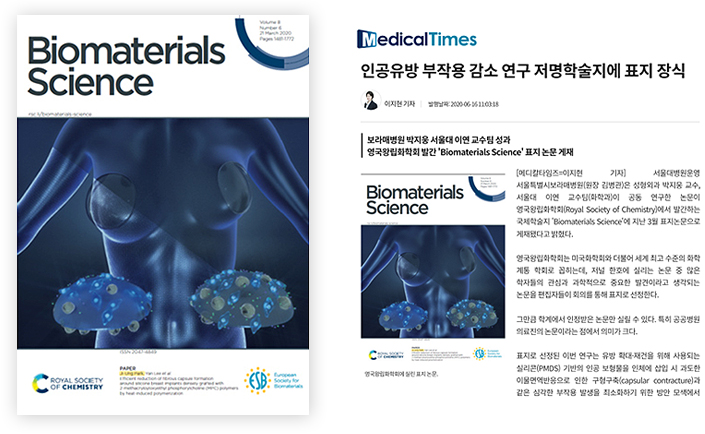
- BS Research's joint research team led by SMG-SNU Boramae Hospital Professor Ji-Ung Park and Seoul National University Professor Yan Lee presented results on the 'Efficient reduction of fibrous capsule formation around silicone gel-filled breast implants densely grafted with 2-methacryloyloxyethyl phosphorylcholine (MPC) polymers by heat-induced polymerization.'
: Results were published as a cover paper in the March 2020 issue of an international journal from the Royal Society of Chemistry, the world-leading chemistry community.
Efficacy of BMH™ Shell Silicone Gel-filled Breast Implant
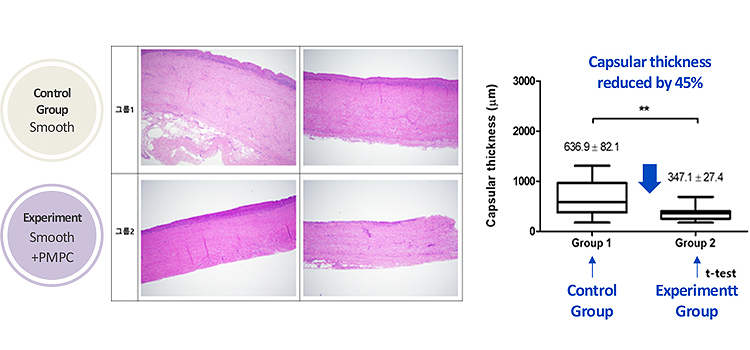
- In a study that measured the capsular thickness of non-grafted and grafted silicone gel-filled breast implants 24 weeks after being inserted to pigs, results showed that the capsular thickness of the two were as follows:
- Grafted breast implants showed significant 45% less capsular thickness
- The non-thickening capsular can serve as evidence of its capsular contracture prevention effect
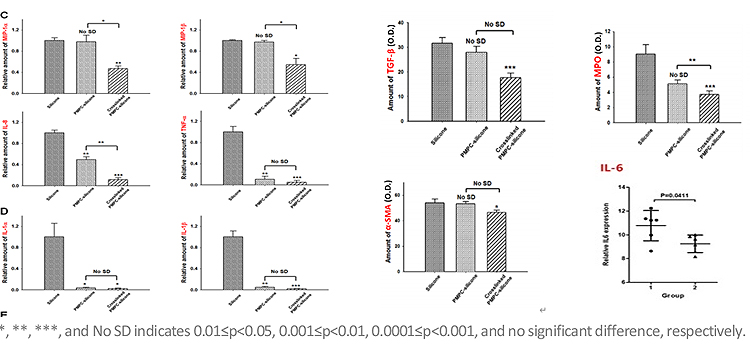
- The lower cytochemical level in the grafted silicone gel-filled breast implant when compared with the non-grafted implant indicate that:
- The biomarkers related to foreign body reaction and inflammatory response were significantly lower with the grafted implant
- Expression of inflammatory cells and collagen was significantly lower
- These can serve as evidence that the grafted silicone gel breast implant prevents excessive foreign body reaction and inflammation
| Differences in Capsular Thickness According to Grafting Status |
|---|
 |
| Differences in Inflammatory Markers According to Grafting Status |
|---|
 |
Biological Safety
- BS Research performed a biocompatibility tests(Cytotoxicity, Intracutaneous Reactivity, Skin Sensitization, Acute Systemic Toxicity, Material-mediated Pyrogenicity, Genotoxicity, Rat-implantation, Rat-Subchronic Toxicity tests) according to ISO10993 at the GLP-certified testing lab.
- BS Research's biocompatible surface silicone gel-filled breast implant is the only product that has biocompatibility and a BMH™Shell, which has similar properties to the cell membranes
- PMPC is the material that has been used and approved for the medical devices such as coronary artery stents and artificial joints due to its benefit of biocompatibility.
- BS Research grafted PMPC on the shell of silicone gel-filled breast implant for the first time, and the grafting technology provides a differentiated effectiveness, semi-permanent biocompatibility.
Performance & Physicochemical Properties
- BS Research completed development of silicone gel-filled breast implant with BMH™ Shell and it meets the regulatory authorities' global standard requirements.
Current status of breast implant
- Completed biological safety tests
- Completed performance and physicochemical property tests
Plans for Clinical Trials in Korea and Abroad
- Clinical trial in Korea: Planned IDE/IRB approval in 2023
- Clinical trials in the U.S. and Europe: Planning to promote clinical trials, including overseas partnership or license-out
Plans for Overseas Market Expansion
- Considering and reviewing overseas partnerships and licensing-out options
: Technology transfer; establishment of joint venture; supplying the company's biocompatible surface construction technology based on grafting technology, etc.